Ten years ago, buying glasses in India meant a cramped local shop, a limited frame selection and a bill that made you wince. My own pair took three visits and a week of waiting.
Then Lenskart arrived with a simple promise: good glasses, fair price, fast delivery. The Lenskart business model looks like ordinary retail from the outside. It isn’t. Here’s how it makes money, how it grows, and what could trip it up in 2026.
What Is the Lenskart Business Model?
The Lenskart business model is a vertically integrated, omnichannel eyewear model. Lenskart designs, manufactures and sells its own frames and lenses through stores, its app and home eye tests, cutting out middlemen and passing part of the saving to customers. It was founded in 2010 by Peyush Bansal and co-founders.
Most eyewear sold in India still goes through distributors and wholesalers, each taking a cut. Lenskart skips that chain, and that’s the whole trick.
How Lenskart Makes Money
Lenskart earns from selling prescription glasses, sunglasses, contact lenses and, more recently, smart glasses. The margin comes from owning the whole process: it makes most frames in-house, so it keeps the profit a brand would normally share with a manufacturer and a distributor.
In FY26, Lenskart sold 35.3 million eyewear units and conducted 23.8 million eye tests. That second number matters more than it sounds. Eye tests bring people in, and most of them buy. multibagg
Its Gold membership adds a steady, repeat-buying customer on top. Honestly, that’s a smart move in a product people replace every couple of years.
Vertical Integration: The Real Engine
Picture a customer in Jaipur ordering lenses at a Lenskart store. The order goes to a large automated factory, often the Bhiwadi facility in Rajasthan, and returns within days.
Owning manufacturing gives Lenskart three things: lower cost per pair, tighter quality control and quick delivery. Competitors who buy from suppliers can’t match all three at once. Is this expensive to build? Very. But once it’s running, it’s tough to copy.
The Omnichannel Playbook: Stores, App and Home Visits
Lenskart didn’t pick online or offline. It did both.
Customers browse on the app, try frames virtually, get a free home eye test or walk into a store. Many buy in stores after researching online, and that blend is what pure e-commerce players missed. People still want to try glasses on their face before paying.
The numbers show it’s working. Lenskart added 542 net new stores in India in FY26, up from 282 the year before, and 254 of those were in Tier 2+ markets. multibagg
Growth Strategy: Tier 2 Cities and Going Global
A big part of the Lenskart business model in 2026 is reaching smaller towns where good eyewear options are thin. Total store count reached 3,327 globally by Q4 FY26. By June 2026, that had grown to 3,459 stores. inc42inc42
International is the other bet. International revenue rose 38% to ₹1,203 crore in Q1 of the latest fiscal year, nearly matching the India segment’s ₹1,531 crore. That’s a big shift for a brand that once felt purely Indian. hdfcsky
There’s also technology. Lenskart launched smart glasses called B by Lenskart, though management says it’s a multi-year effort with no near-term revenue counted on. multibagg
Lenskart Business Model by the Numbers
The financial picture is strong. FY26 profit rose 69% to ₹500.9 crore, while revenue grew 33% to ₹8,814 crore. Some outlets report slightly different totals, so check the company’s filings before quoting exact figures. inc42
India same-store sales growth was 24.2% in Q4, which suggests new stores aren’t stealing from old ones. inc42
Risks Lenskart Still Faces
No business model is perfect. Rapid expansion strains quality. Rising costs, rupee swings and international competition squeeze margins. Management noted that gross margin was stable in FY26 because the benefits of integration and premiumisation were offset by rupee depreciation. business-standard
Smart glasses are exciting but unproven. I’d watch whether they become a real revenue stream or stay a headline.
FAQs
Who founded Lenskart?
Peyush Bansal, Amit Chaudhary, Neha Bansal and Sumeet Kapahi, in 2010.
How does Lenskart make money?
By selling its own eyewear through stores, its app and home services, with higher margins from in-house manufacturing.
Is Lenskart profitable?
Yes. FY26 net profit was roughly ₹501 crore, a big jump from the previous year.
How many stores does Lenskart have?
Over 3,400 globally as of mid-2026.
Is Lenskart listed on the stock market?
Yes, it listed in 2025.
What makes Lenskart different from local opticians?
Its own factory, standard pricing, wide frame range and fast delivery.
Conclusion
The Lenskart business model works because it controls the chain: design, manufacture, retail and eye tests. Add Tier 2 expansion and international growth, and you get a company growing faster than most retail brands.
If you’re studying it for a business idea, the lesson is clear: own the part of the chain where margins hide. And if you’re just buying glasses, try the free home eye test and compare the final price with your local optician. The difference may surprise you.
Internal linking suggestions:
- [link to guide on vertical integration examples in India here], in the vertical integration section
- [link to article on omnichannel retail strategy here], in the omnichannel section
- [link to Zerodha business model case study here], in the conclusion
Image alt text suggestions:
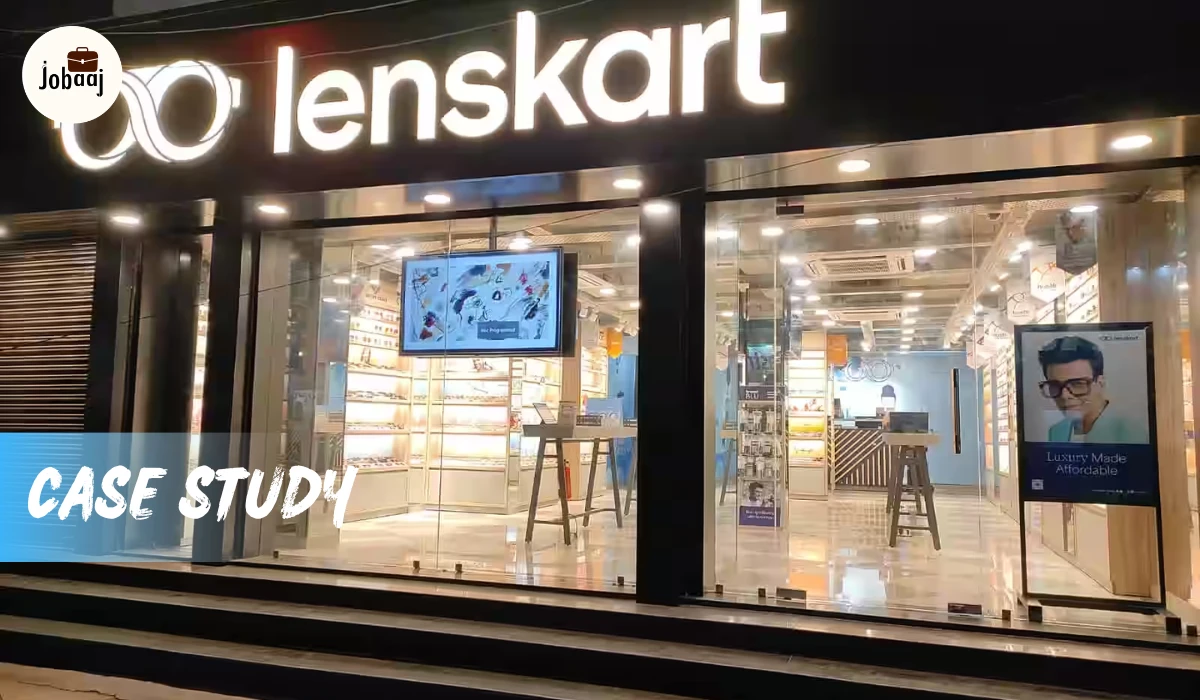
- “Lenskart store in India with customers trying eyewear frames”
- “Diagram of the Lenskart business model showing in-house manufacturing to store delivery”
- “Chart of Lenskart store growth across India and international markets”