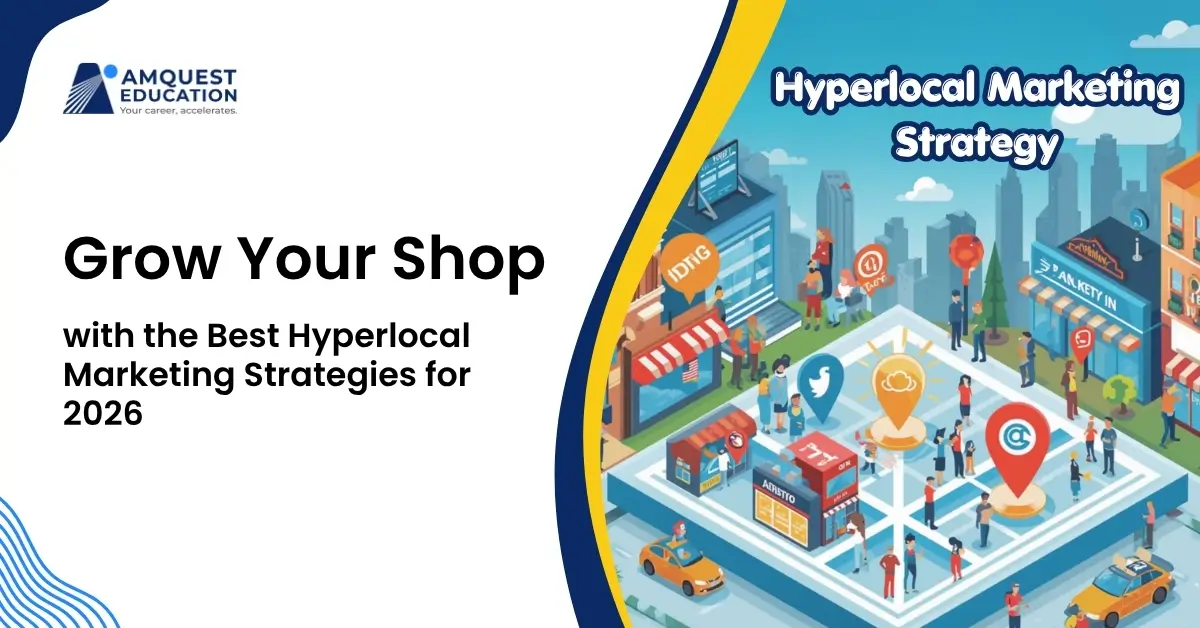
You run a bakery in Malviya Nagar. A new cloud kitchen opens two streets away and starts spamming the whole city with Instagram ads. You can’t match their budget. But you don’t need to, because your customers live within three kilometres of your counter.
That’s the core idea behind hyperlocal marketing. You stop chasing everyone and focus on people within walking or short driving distance. For a small shop, it’s usually the cheapest and most reliable way to grow. Here are practical ideas you can start this week.
[Image alt text: Shop owner updating a Google Business Profile on a phone, hyperlocal marketing for small shops]
What Is Hyperlocal Marketing?
Hyperlocal marketing means promoting your business to people in a very small geographic area, usually your neighbourhood or a few kilometres around your shop. It uses tools like Google Maps listings, WhatsApp, local social media and nearby partnerships to turn people who live close by into regular customers.
Big brands think in cities and states. You think in lanes, societies and market chowks. That’s your advantage, because nobody knows your area better than you.
Fix Your Google Business Profile First
When someone searches “bakery near me” or “mobile repair Vaishali Nagar,” Google Maps shows a handful of shops. If you’re not there, you’re invisible to the exact people most likely to buy.
A Google Business Profile is free. Set it up properly:
- Add the correct name, address, phone number and opening hours.
- Pick accurate categories, like “bakery” or “mobile phone repair shop.”
- Upload real photos of your shop, products and team.
- Post offers and updates regularly.
- Answer questions people ask on the listing.
Then ask happy customers for reviews. Don’t buy fake ones, because Google can penalise that, and customers can tell.
Honestly, I’d do this before spending ₹1 on ads. It’s the single best hyperlocal marketing move for most shops.
Use WhatsApp Business Like a Neighbourhood Counter
WhatsApp Business is one of the most effective hyperlocal marketing tools in India. Set up a catalogue, quick replies and a business profile, then invite nearby customers to message you for orders, price checks and offers. It feels personal and costs almost nothing.
Most customers already use WhatsApp daily. Put a QR code at your counter, on bills and on your shop board that opens a chat with you.
Some simple uses:
- Share a weekly “what’s fresh” or “new stock” message with people who’ve opted in.
- Take pre-orders and home delivery requests.
- Send reminders, like “your repaired phone is ready.”
Only message people who agreed to hear from you. Spamming strangers gets you blocked, and it can break platform rules.
Tie Up With Neighbouring Businesses
Your best marketing partners are the shops around you, not your competitors.
Picture a Jaipur stationery shop that teams up with the tuition centre next door. The centre hands students a ₹20-off coupon for the shop, and the shop displays the centre’s flyers. Both get new customers, and neither spends on ads.
Other ideas:
- A salon and a bridal wear store cross-recommending each other
- A gym and a health food shop sharing offers
- A bakery supplying snacks to a nearby coaching institute or office
Residents’ welfare associations (RWAs) and society WhatsApp groups can also be useful, but ask the admin first and follow the group’s rules.
Make Your Shop Itself a Marketing Tool
Offline basics still work, especially for walk-in businesses.
- A clear signboard. If people can’t read your name from across the road, you’re losing customers daily.
- A sidewalk board or banner with a daily special or offer.
- Neat window display that changes weekly.
- Flyers distributed within 2 to 3 km, with a clear offer and your WhatsApp number.
- A loyalty card, such as “buy 9 get the 10th free.”
I’ve noticed shop owners spend on Instagram reels but ignore the board outside. Fix the front of your shop first.
Run Small, Local Online Ads
For hyperlocal advertising, use Meta (Facebook and Instagram) or Google ads with a tight radius around your shop, such as 2 to 5 km. Show a clear offer, a photo of your shop and a way to call or message you. Start small, test, then increase the budget only if it brings customers.
Don’t run ads for the whole city. If you’re a Vaishali Nagar tailor, there’s no point paying to reach someone in Mansarovar.
Start with a small daily budget, maybe ₹200 to ₹300. Run for a week, then check how many calls, messages or walk-ins you actually got. If a customer says “I saw your ad,” note it down.
Community and Event Marketing
People trust shops that show up in their neighbourhood.
- Sponsor a small local cricket match or society festival.
- Set up a stall at a nearby weekend market or Diwali mela.
- Host a free workshop, like a cake-decorating demo or a phone safety session.
- Support a local cause and tell people about it.
These cost little and build goodwill that no ad can buy. They also give you photos and stories for your social media.
Collect Reviews, Referrals and Repeat Customers
Word of mouth is the heart of hyperlocal marketing. Make it easier for it to happen.
- Ask satisfied customers to leave a Google review, and share the link on WhatsApp.
- Offer a small referral reward, like ₹50 off for both people.
- Save customers’ names and preferences, if they’re comfortable with it.
- Thank people by name. In a neighbourhood, that matters more than any discount.
Mistakes Small Shops Make
- Leaving the Google listing half-filled or outdated
- Promoting to everyone instead of the nearby area
- Copying big brands’ offers that destroy their margins
- Messaging customers without permission
- Not tracking which activity brings people in
FAQs
What is hyperlocal marketing in simple words?
It’s promoting your business to people living or working very close to your shop, using local tools like Google Maps, WhatsApp and nearby partnerships.
How can a small shop start hyperlocal marketing?
Set up your Google Business Profile, add WhatsApp Business, ask for reviews and partner with one or two neighbouring shops.
Is hyperlocal marketing expensive?
No. Many methods are free or low-cost, such as Google listings, WhatsApp and local tie-ups. Paid ads are optional.
Which platform works best for local shops in India?
Google Business Profile and WhatsApp Business are the two most useful starting points for most shops.
How do I measure hyperlocal marketing results?
Track calls, WhatsApp messages, coupon redemptions and the answer to “How did you hear about us?”
How far should my hyperlocal marketing reach?
For most walk-in shops, 2 to 5 km. Adjust for your product, since a furniture store may draw from farther.
Conclusion
Hyperlocal marketing works because it matches how local businesses actually grow: people nearby find you, trust you and come back. Start with Google Business Profile and WhatsApp, add one neighbouring tie-up, fix your shop’s front, and collect reviews steadily. Add small local ads only after the basics are working.
This week, do one thing: complete your Google Business Profile with fresh photos and correct hours. Then ask your next five happy customers for a review. You’ll likely see the difference in a few weeks, in the form of more calls and more people walking through the door.
[Link to related guide: how to handle customer objections in sales]
Internal link suggestions:
[link to guide on Google Business Profile setup for shops here]
[link to article on WhatsApp Business tips for small sellers here]
[link to post on low-cost marketing ideas for small businesses here]
Image alt text:
“Shop owner updating a Google Business Profile on a phone, hyperlocal marketing for small shops”
“Local bakery with a sidewalk offer board and WhatsApp QR code at the counter”
“Two neighbouring shop owners exchanging coupons, a hyperlocal marketing partnership”